A Simple Guide to Great Coffee
Coffee Growing Conditions & Regional Influence
How environment shapes flavour
Coffee is incredibly sensitive to where and how it’s grown. Beyond climate and rainfall, several key environmental factors have a huge impact on flavour — especially altitude, soil, and region.
Altitude (Meters Above Sea Level)
Coffee grown at higher elevations matures more slowly. This slower growth allows sugars and acids to develop more fully inside the bean.
Low altitude (under 1,000masl)
- Flavour: Earthy, nutty, mild
- Body: Heavier
- Acidity: Lower
Mid altitude (1,000–1,500masl)
- Flavour: Balanced, sweet, chocolatey
- Body: Medium
- Acidity: Moderate
High altitude (1,500masl+)
- Flavour: Bright, complex, fruity, floral
- Body: Lighter
- Acidity: Higher, more vibrant
Many of the world’s most celebrated specialty coffees are grown at high elevations, where cooler temperatures slow cherry development and intensify flavour.
Soil & Climate
Volcanic soils (common in parts of Central America and East Africa) are rich in minerals and nutrients, contributing to sweeter and more complex coffees. Seasonal rainfall patterns also determine how evenly cherries ripen, which affects consistency in the cup.
Flavour Differences by Coffee-Growing Region
Why origin matters
Each coffee-producing country and often each region within it brings its own flavour signature.
Africa (Ethiopia, Kenya, Rwanda)
- Flavour: Floral, citrus, berry, tea-like
- Acidity: Bright and lively
- Body: Light to medium
Ethiopia, the birthplace of coffee, is famous for complex, aromatic coffees with jasmine, blueberry, and stone fruit notes.
Central America (Guatemala, Honduras, Costa Rica)
- Flavour: Clean, balanced, caramel, chocolate, citrus
- Acidity: Crisp but controlled
- Body: Medium
These coffees are known for structure and clarity, often influenced by high altitudes and volcanic soil.
South America (Brazil, Colombia, Peru)
- Flavour: Nutty, chocolatey, sweet, mild fruit
- Acidity: Lower to medium
- Body: Medium to full
Brazil produces smooth, comforting coffees, while Colombia often balances sweetness with gentle fruit acidity.
Asia-Pacific (Indonesia, Papua New Guinea)
- Flavour: Earthy, spicy, woody, cocoa
- Acidity: Low
- Body: Heavy and syrupy
These coffees tend to be bold and deep, often shaped by unique processing methods and humid climates.
Coffee Seasons Around the World
Why freshness matters
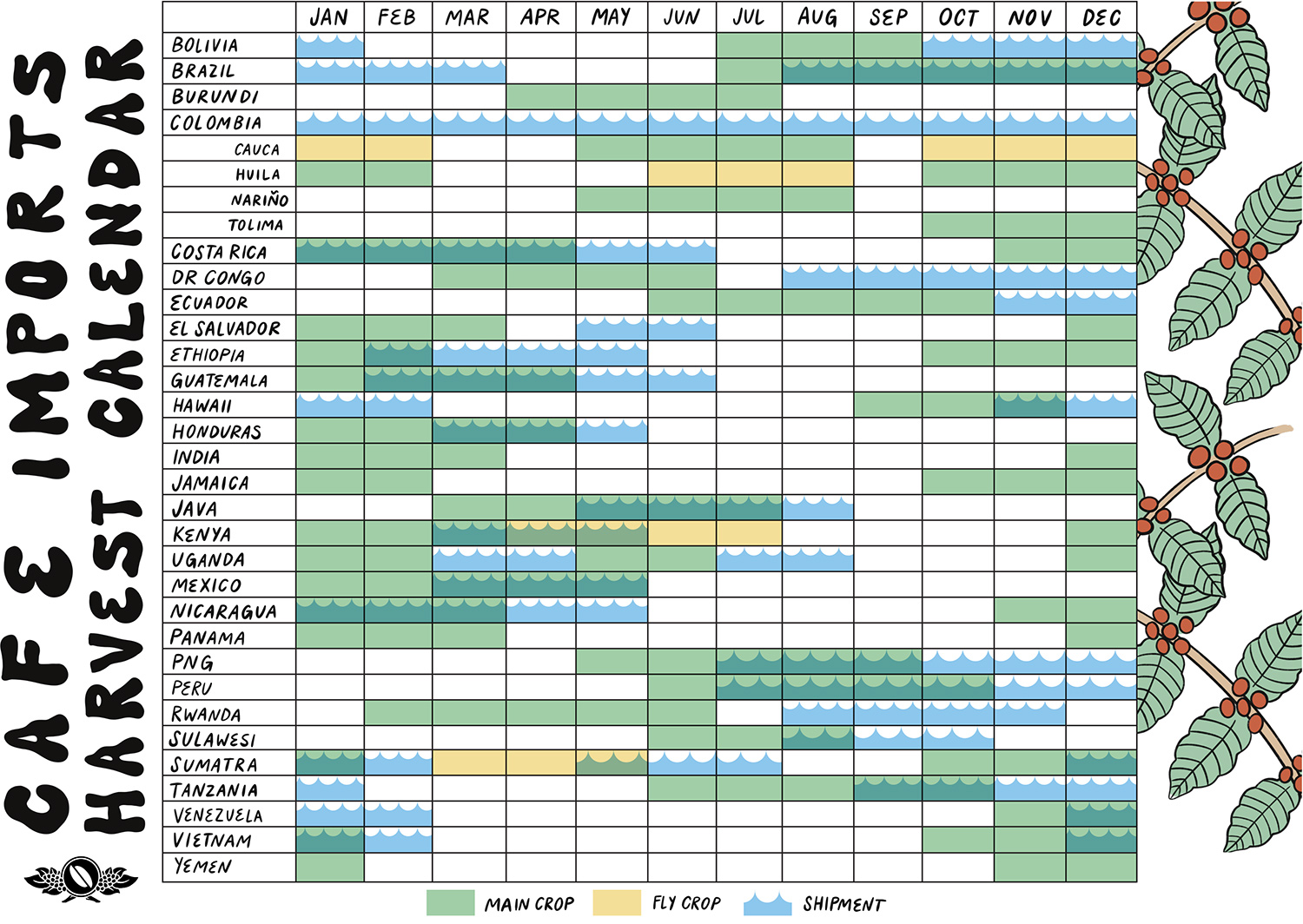
Coffee isn’t harvested year-round everywhere. Each producing region has its own growing and harvest seasons, which is why coffees rotate throughout the year.
General Harvest Seasons
- Central America: November – March
- South America: April – September
- Africa: October – February
- Asia-Pacific: September – March
Freshly harvested coffee tends to be brighter, sweeter, and more expressive. At Lizard Lane Coffee, we keep an eye on these cycles so we can roast beans at their best, when flavours are most alive.
Below is a copy of coffee growing seasons around the world (courtesy of Café Imports)